
In today’s fitness culture, fat loss is often portrayed as something that must be hard, intense, and exhausting. Gyms, HIIT workouts, CrossFit, calorie-burning machines, and extreme training protocols dominate social media and marketing narratives. Walking, in comparison, is frequently dismissed as too basic to be effective.
This assumption is not only misleading—it ignores human physiology.
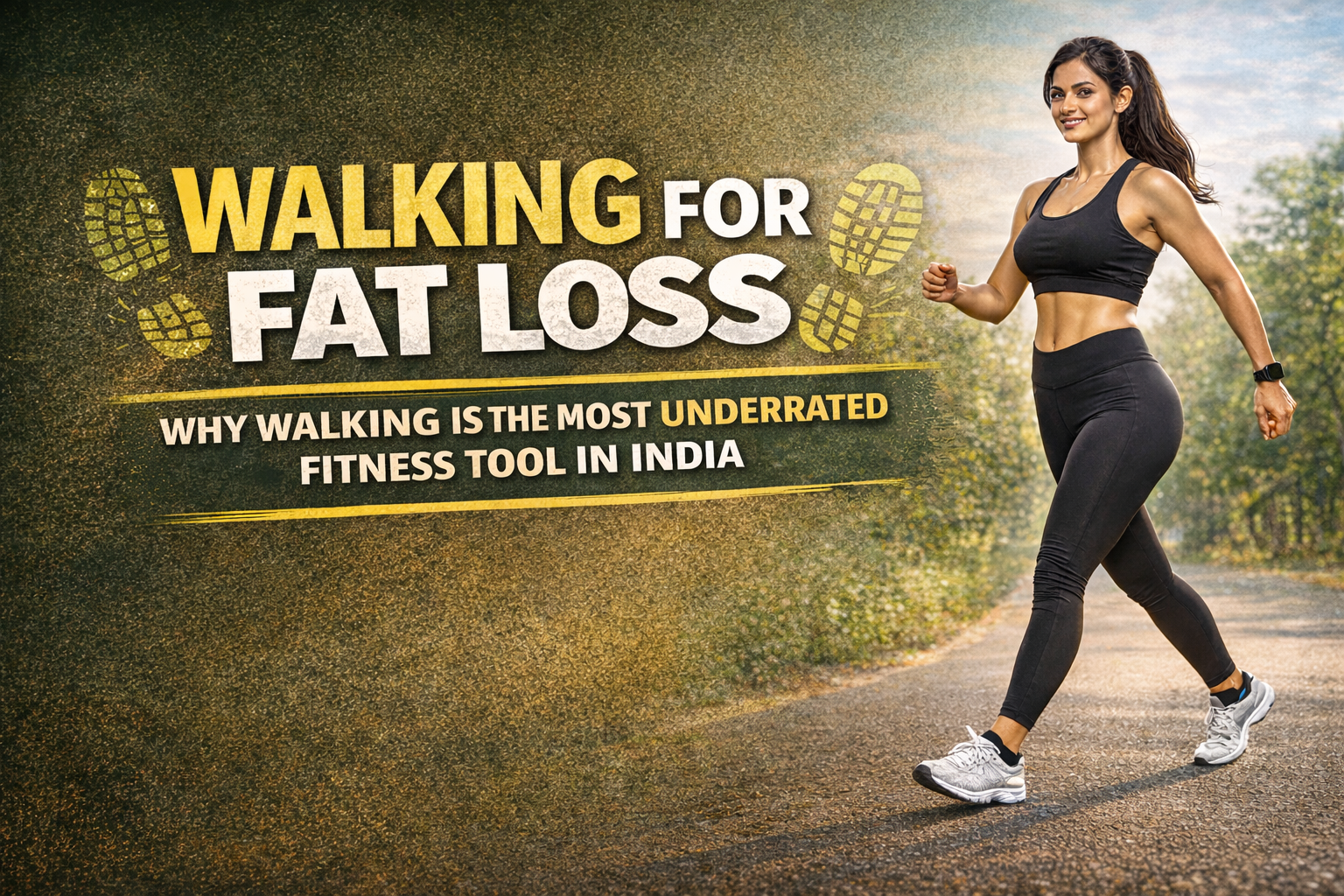
Walking is one of the most effective, sustainable, and scientifically supported fat-loss tools, particularly for Indian lifestyles shaped by long working hours, high-carbohydrate diets, chronic stress, and poor consistency with exercise. Far from being “too easy,” walking works precisely because it aligns with how the human body is designed to burn fat over time.
This article explains why walking plays such a powerful role in fat loss, how it affects hormones and metabolism, and why it should form the foundation of any long-term fitness strategy.
Why Walking Matters for Fat Loss
Fat loss is not determined by how exhausted you feel after a workout. It depends on three core factors:
- Daily energy expenditure
- Hormonal balance
- Consistency over time
Walking influences all three simultaneously.
Unlike short bursts of intense exercise, walking increases total daily movement, improves metabolic health, and can be repeated every single day without recovery issues. This makes it uniquely effective for real-world fat loss—not just short-term weight drops.
Key Benefits of Walking for Fat Loss
- Increases calorie burn across the entire day
- Improves insulin sensitivity
- Reduces stress-related hormones
- Preserves lean muscle mass
- Enhances digestion and recovery
- Encourages long-term adherence
1. Walking Increases Daily Calorie Burn Through NEAT
A common misconception is that fat loss happens primarily in the gym. In reality, most calories burned each day come from NEAT (Non-Exercise Activity Thermogenesis)—the energy you expend through everyday movement.
NEAT includes:
- walking
- standing
- household activities
- general physical movement
For most people:
- NEAT contributes 15–30% of daily calorie expenditure
- Structured workouts contribute only 5–10%
This means that consistent walking spread throughout the day can burn as many—or even more—calories than a single gym session, without increasing fatigue or stress.
Unlike intense workouts, walking:
- does not excessively elevate cortisol
- does not inflame joints
- does not require rest days
- integrates naturally into daily routines
Over weeks and months, this steady energy expenditure plays a major role in fat loss.
2. Walking After Meals Helps Control Blood Sugar and Fat Storage
One of the biggest drivers of fat gain is poor blood sugar control after meals. This is especially relevant in Indian diets that commonly include rice, roti, dal, potatoes, sweets, and added fats.
When blood glucose rises sharply and remains elevated:
- insulin levels increase
- unused glucose is stored as fat
- insulin resistance worsens over time
Even short bouts of walking can change this process.
Walking for 10 minutes after meals has been shown to:
- reduce post-meal glucose spikes by around 10–15%
- improve insulin sensitivity
- lower the likelihood of fat storage
- reduce long-term diabetes risk
- support digestion
This simple habit helps the body use incoming calories as energy instead of storing them as fat.
3. Walking Reduces Belly Fat by Improving Hormonal Balance
Abdominal fat accumulation is strongly linked to hormonal disturbances rather than calorie intake alone. Two factors are especially important:
- elevated cortisol (stress hormone)
- insulin resistance
Both are common in modern Indian lifestyles.
Walking directly addresses these issues. Regular walking:
- lowers baseline cortisol levels
- improves insulin sensitivity
- increases fat oxidation
- reduces chronic inflammation
By improving the hormonal environment, walking creates conditions where belly fat is more easily mobilized, even without extreme dieting or aggressive training.
4. Walking Is the Most Sustainable Exercise for Indian Lifestyles
The most common reason fat-loss plans fail is not lack of knowledge—it is lack of consistency.
Walking succeeds where many programs fail because it is:
- low impact
- joint-friendly
- suitable for all age groups
- easy to maintain alongside work and family responsibilities
- possible without access to a gym
Consistency always outperforms intensity. Walking allows people to stay active daily without burnout, injury, or mental fatigue.
5. Walking Improves Digestion and Reduces Bloating
Digestive complaints such as bloating, acidity, gas, constipation, and IBS-like symptoms are widespread.
Walking supports digestion by:
- increasing blood flow to the gastrointestinal tract
- improving intestinal motility
- reducing fermentation and gas buildup
- lowering stress-related digestive inhibition
A light 10-minute walk after meals can significantly reduce bloating and discomfort, making it one of the simplest non-pharmaceutical tools for gut health.
6. Walking Improves Heart Health and Longevity
Walking has well-established benefits for cardiovascular health.
Regular walking is associated with:
- reduced blood pressure
- improved cholesterol profiles
- enhanced circulation
- reduced arterial stiffness
- lower risk of heart disease and stroke
Research consistently shows that 6,000–8,000 steps per day are associated with a 30–40% reduction in all-cause mortality.
For individuals with high blood pressure, diabetes, obesity, or a family history of heart disease, walking is not optional—it is foundational.
7. Walking Supports Mental Health and Stress Regulation
Chronic stress interferes with fat loss by increasing cortisol, triggering cravings, and promoting emotional eating.
Walking helps counter these effects by:
- calming the nervous system
- stimulating endorphin release
- improving breathing patterns
- enhancing sleep quality
In high-stress environments, walking acts as a powerful regulator of mood and appetite, indirectly supporting fat loss.
8. Walking Burns Fat Without Sacrificing Muscle
There is a persistent myth that walking leads to muscle loss. In reality, walking:
- primarily burns fat
- preserves lean muscle tissue
- supports recovery between strength sessions
- reduces the risk of overtraining
When combined with resistance training, walking creates an ideal balance—maximizing fat loss while maintaining muscle mass.
9. Ideal Starting Point for Overweight and Beginner Individuals
Walking is especially effective for people who:
- are overweight or obese
- experience knee or back pain
- have PCOD or PCOS
- live with diabetes or insulin resistance
- cannot tolerate high-intensity workouts
It improves aerobic capacity without excessive joint stress, making it the safest and most accessible starting point for long-term transformation.
10. How Much Walking Is Needed for Fat Loss?
General guidelines:
- General health: 6,000–7,000 steps per day
- Fat loss: 8,000–10,000 steps per day
- Accelerated fat loss: 10,000–12,000 steps per day
- Blood sugar control: 10 minutes of walking after meals
The focus should be gradual progression rather than perfection.
11. Walking Combined with Strength Training
Walking and strength training serve different but complementary roles.
- Walking increases daily calorie expenditure and improves metabolic health
- Strength training builds muscle and improves body composition
Together, they:
- raise overall metabolism
- improve insulin sensitivity
- reduce fat regain
- support sustainable results
This combination represents one of the most reliable long-term fat-loss strategies.
Final Thoughts: Walking Is a Scientific Fat-Loss Tool
Walking is underestimated because it feels easy. But fat loss is not driven by pain, exhaustion, or punishment. It is driven by:
- consistent movement
- energy balance
- hormonal regulation
- sustainable habits
Walking delivers all of these.
It helps:
- burn fat
- control blood sugar
- reduce belly fat
- improve digestion
- manage stress
- protect joints
- increase lifespan
Walking is not “light” exercise.
It is a powerful, science-backed fat-loss strategy—especially when practiced consistently over time.