
Most people believe the goal of fitness is simple: lose weight.
The scale goes down, compliments come in, and the assumption is that progress has been made.
Scientifically, this assumption is flawed.
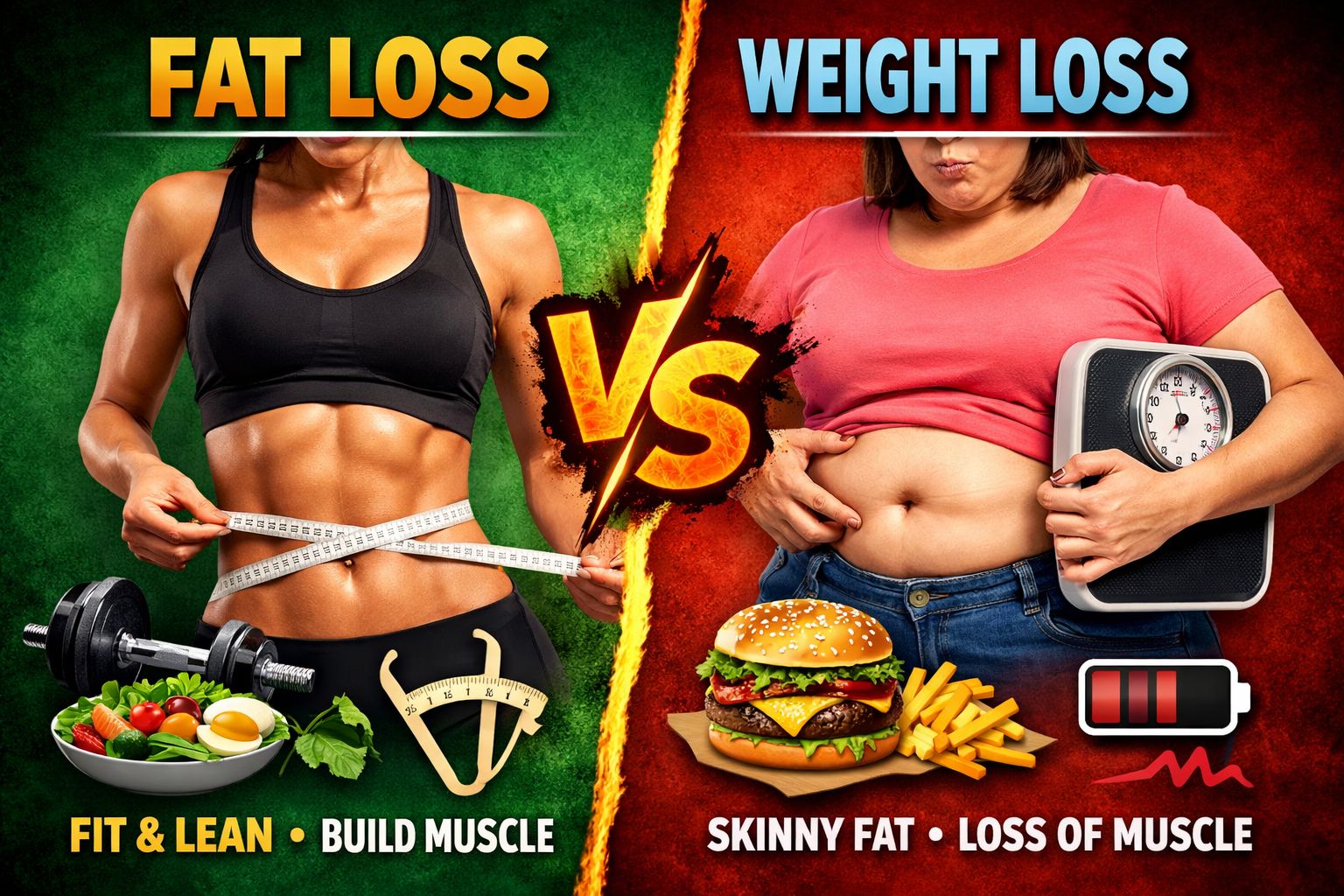
Weight loss and fat loss are not the same thing.
Confusing the two is one of the biggest reasons people in India diet repeatedly, lose motivation, damage their metabolism, and regain fat—often ending up worse than where they started.
This article explains the physiology, metabolism, hormonal impact, and long-term consequences of weight loss versus fat loss, and why only one of them leads to a lean, healthy, and sustainable body.
Understanding the Basic Difference
What Is Weight Loss?
Weight loss refers to a reduction in total body weight.
That weight can come from:
- body fat
- muscle tissue
- water
- glycogen (stored carbohydrates)
- gut content
The scale does not distinguish what you lost—only how much.
What Is Fat Loss?
Fat loss refers specifically to the reduction of stored body fat, while:
- preserving muscle
- maintaining metabolic rate
- protecting hormonal balance
Fat loss improves:
- body shape
- strength
- health markers
- long-term sustainability
This distinction is critical.
Why the Scale Is a Poor Indicator of Progress
When people aggressively cut calories, eliminate carbohydrates, or follow crash diets, the scale often drops quickly. However, most of that initial loss comes from:
- water loss
- glycogen depletion
- muscle breakdown
Fat loss, on the other hand, is slower but structural.
Two people can weigh the same but look completely different because:
- one has higher muscle mass and lower fat
- the other has lower muscle mass and higher fat
The scale cannot capture this difference.
The Physiology Behind Weight Loss
Weight loss-focused approaches usually involve:
- extreme calorie restriction
- excessive cardio
- minimal protein intake
- poor recovery
What Happens Inside the Body
- Glycogen Depletion
Carbohydrates store water in the muscles. When carbs are reduced, water weight drops rapidly. - Muscle Breakdown
In a severe calorie deficit, the body breaks down muscle for energy. - Metabolic Adaptation
The body responds by lowering metabolic rate to conserve energy. - Hormonal Disruption
- cortisol increases
- thyroid hormones downregulate
- leptin drops
- hunger increases
The result is temporary weight loss followed by fat regain.
The Physiology Behind Fat Loss
Fat loss requires a different internal environment.
Key requirements:
- moderate calorie deficit
- adequate protein intake
- resistance training
- sufficient daily movement
- stress control
What Happens Inside the Body
- fat cells release stored energy
- muscle tissue is preserved
- insulin sensitivity improves
- metabolic rate remains stable
- hormones remain functional
Fat loss reshapes the body rather than shrinking it indiscriminately.
Why Weight Loss Makes You Look “Skinny-Fat”
Many people lose weight yet:
- still have belly fat
- lack muscle definition
- feel weak and tired
- experience loose skin
This is known as the skinny-fat phenotype.
It occurs because:
- muscle is lost along with fat
- body fat percentage remains high
- metabolism slows down
Weight loss changes the number on the scale.
Fat loss changes the structure of the body.
Muscle: The Most Misunderstood Factor in Fat Loss
Muscle is not just for aesthetics. It is:
- metabolically active tissue
- a regulator of blood sugar
- a determinant of insulin sensitivity
- a protector against fat regain
Losing muscle during weight loss:
- reduces daily calorie burn
- worsens insulin resistance
- increases fat regain risk
Preserving muscle during fat loss:
- keeps metabolism higher
- improves body composition
- creates a leaner appearance at higher weights
This is why two people at the same weight can look dramatically different.
Hormonal Impact: Weight Loss vs Fat Loss
Weight Loss Hormonal Effects
- increased cortisol
- reduced thyroid output
- lower leptin (satiety hormone)
- higher ghrelin (hunger hormone)
This combination makes fat regain almost inevitable.
Fat Loss Hormonal Effects
- improved insulin sensitivity
- stable thyroid function
- controlled cortisol levels
- better appetite regulation
Fat loss works with physiology, not against it.
Why Indians Struggle More With Weight Loss Approaches
Indian lifestyles amplify the downsides of weight-loss-focused methods due to:
- high carbohydrate diets
- sedentary work patterns
- high stress levels
- poor sleep quality
- low protein intake
Aggressive dieting in this environment leads to:
- muscle loss
- hormonal disruption
- stubborn belly fat
- repeated weight cycling
Fat loss strategies address these realities instead of ignoring them.
Weight Loss Is Temporary. Fat Loss Is Structural.
Weight loss is reversible because:
- water returns
- glycogen refills
- fat is easily regained
Fat loss is structural because:
- fat cells shrink
- muscle mass is preserved
- metabolic adaptations are minimized
This is why fat loss leads to long-term results, while weight loss often leads to relapse.
How to Measure Fat Loss Correctly
Better indicators than scale weight:
- waist circumference
- body fat percentage
- progress photos
- strength levels
- energy and recovery
- how clothes fit
A stable or slowly decreasing scale weight with visible fat loss is often better progress than rapid weight loss.
The Role of Exercise: Cardio vs Strength Training
Weight Loss Approach
- excessive cardio
- minimal resistance training
- high fatigue, low recovery
Fat Loss Approach
- resistance training to preserve muscle
- walking and daily movement to increase calorie burn
- controlled cardio for cardiovascular health
Fat loss is about body recomposition, not punishment.
Why Fat Loss Takes Longer—but Works Better
Fat loss is slower because:
- the body protects fat stores
- hormonal adjustments take time
- muscle preservation requires recovery
But this slower pace results in:
- better shape
- better health markers
- better sustainability
- better confidence
Fast results fade. Structural change lasts.
Common Myths That Keep People Stuck
“If the scale is dropping, I’m progressing.”
Not necessarily.
“Eating less is always better.”
Excessive restriction backfires.
“Cardio is the best way to lose fat.”
Without muscle preservation, it often isn’t.
“Lighter weight means healthier body.”
Body composition matters more than body weight.
The Real Goal: Improve Body Composition
Fitness is not about becoming lighter.
It is about becoming leaner, stronger, and metabolically healthier.
That means:
- less body fat
- more or preserved muscle
- better insulin sensitivity
- stable energy and hormones
This is fat loss.
Final Verdict: Fat Loss > Weight Loss
Weight loss changes a number.
Fat loss changes your body.
Weight loss can:
- slow metabolism
- reduce strength
- worsen hormones
- lead to fat regain
Fat loss can:
- improve shape
- protect muscle
- stabilize hormones
- create lasting results
If your goal is health, aesthetics, confidence, and sustainability, fat loss—not weight loss—should be the priority.
The scale may move slower.
But your body will move in the right direction.